Historically, the hospital was the profit engine of the healthcare system. High-acuity procedures and inpatient stays generated the margins required to sustain operations.
In 2026, the financial logic has flipped. The integration of digital biomarkers in personalized healthcare has moved the center of gravity away from high-cost facilities toward continuous, home-based monitoring.
This shift is driven by the 2026 CMS Site of Service Payment Differential, which reduced facility-based work RVUs while increasing reimbursement for non-facility (office and home) settings by approximately 4%.
In this new environment, personalized healthcare is no longer a “premium” offering. It has become a survival strategy.
To maintain margins, healthtech leaders must transition from a model that waits for patients to arrive at a facility to one that manages them where they live.
Key insights
As of 2026, the CMS Site of Service Payment Differential has fundamentally altered the profitability of traditional “sick care.”
With facility-based reimbursements facing significant cuts and non-facility (home and office) settings seeing a 4% increase, the hospital has transitioned from a profit engine to a primary cost center.
The path to financial sustainability now lies in the integration of digital biomarkers in personalized healthcare. By moving from episodic diagnostics to continuous “data fusion” (HRV, metabolic rate, and sleep architecture), providers can finally solve the productivity paradox.
Automated data synthesis via Ambient AI allows clinicians to deliver high-margin Lifestyle Medicine interventions without increasing the time burden of the traditional office visit.
The hospital is the new cost center
For decades, health systems measured success by bed occupancy and surgical volume. In 2026, those same metrics represent a financial liability.
The CY 2026 Medicare Physician Fee Schedule (PFS) has introduced a permanent structural change: for services performed in a hospital setting, the portion of indirect practice expense allocated to work RVUs has been reduced by 50%.
The impact is substantial. Hospital-based specialties, including cardiology, oncology, and internal medicine, are seeing total reimbursement reductions of 7% to 10% for facility-based procedures.
Simultaneously, outpatient and home-based volumes are projected to grow by 18% through the end of the decade, while inpatient growth remains stagnant at 5%.
These statistics highlight a new reality: the “overhead” of the hospital building is no longer fully covered by medicare.
To protect margins, providers are moving care into the “non-facility” column, where the 2026 conversion factor reflects a 3.6% to 3.8% increase.
In this economy, a patient in a hospital bed is a drain on resources; a patient managed at home via digital biomarkers in personalized healthcare is a sustainable revenue stream.
Digital biomarkers are the currency of Value-Based Health (VBH)
From episodes to streams
In the old “sick care” model, a diagnosis was a snapshot: a single blood pressure reading or a one-time glucose test during a 7-minute visit. In 2026, the diagnostic standard has shifted to data fusion.
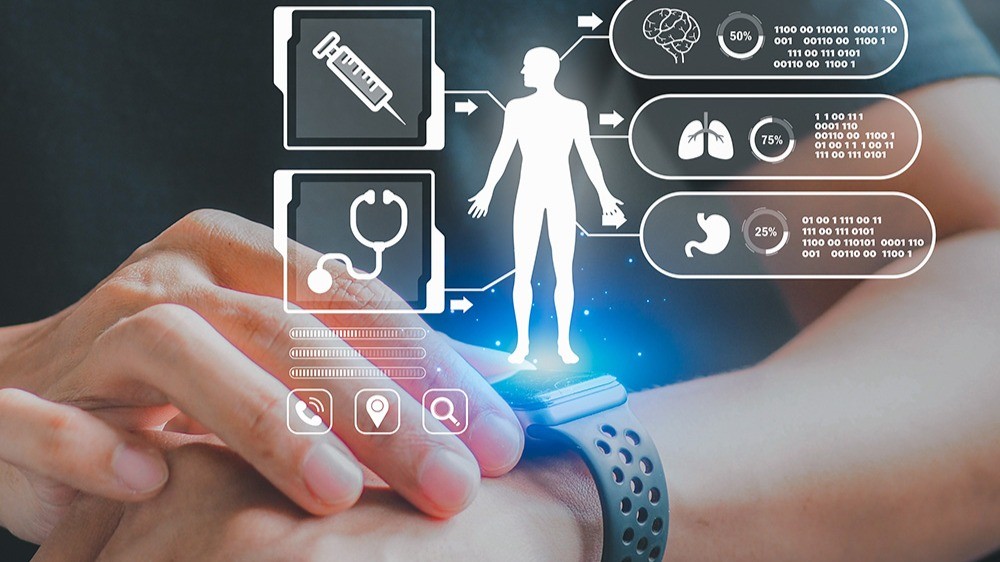
A 2026 diagnosis is built on continuous streams of digital biomarkers: HRV, sleep architecture, and real-time metabolic data. This shift moves care from “episodic” (reacting to a crisis) to “continuous” (managing a trend).
The regulatory catalyst: 2-15 day RTM codes
Digital biomarkers have become the “objective evidence” required for modern billing. The 2026 code set introduced critical flexibility with new Remote Therapeutic Monitoring (RTM) codes:
- CPT 98984 & 98985: These allow for reimbursement of device supply and data transmission for just 2 to 15 days of monitoring within a 30-day period.
- CPT 98979: A new code that reimburses for the first 10 minutes of monthly management time.
These codes remove the “16-day barrier” that previously hindered remote care. They allow providers to bill for shorter, intensive monitoring periods, turning digital biomarker data directly into a monthly revenue stream.
Scaling digital biomarkers in personalized healthcare: Solving the Productivity Paradox
The primary friction in lifestyle medicine has always been time: it is faster to prescribe a pill than to coach a habit.
Digital biomarkers solve this via automation.
Instead of spending half a visit gathering a patient’s history, providers now use ambient AI to synthesize weeks of biomarker data into a “clinical summary” before the appointment begins. This transforms the “7-minute sick visit” into a high-value data review, allowing clinicians to scale digital biomarkers in personalized healthcare without increasing their workload.
Personalizing the GLP-1 exit strategy with digital biomarkers
By 2026, the widespread use of GLP-1 medications has reached a plateau. While these drugs have successfully reduced “food noise” and provided an “easy button” for weight loss, 2026 consumers are now searching for a sustainable exit strategy.
Expert clinical feedback suggests that patients are increasingly concerned about long-term dependency and high out-of-pocket costs as insurance criteria for maintenance doses tighten.
Digital biomarkers provide the data required to manage this transition.
By tracking lean muscle mass, metabolic rate, and glucose variability, providers can identify the exact physiological window for tapering medication. This personalization ensures that the weight loss is maintained through metabolic health rather than permanent pharmaceutical intervention.
For healthtech leaders, this transforms a one-time pharmacy transaction into a high-value, long-term clinical service focused on de-prescription and chronic disease reversal.
Operationalizing the lifestyle revolution
The most significant barrier to preventative care has been the productivity paradox: the reality that a provider can perform four “sick care” visits in the time it takes for one comprehensive lifestyle consultation.
Health systems are resolving this through Shared Medical Appointments (SMAs) and team-based care models.
In 2026, clinical groups utilize peer-to-peer environments where one physician can manage 8 to 12 patients simultaneously, significantly increasing billable throughput while improving patient motivation and outcomes.
The 2026 technical infrastructure relies on agentic AI in healthcare integrated with patient devices. Unlike previous monitoring tools that simply sent alerts, these AI agents provide real-time, automated “nudges” based on biomarker fluctuations.
If a patient’s heart rate variability or sleep data indicates a high-stress state, the system intervenes with specific lifestyle adjustments before the situation requires an emergency visit.
This shift is financially supported by the CMS ACCESS (Advancing Chronic Care with Effective, Scalable Solutions) Model, which launched in July 2026. This ten-year initiative moves away from visit-based billing toward Outcome-Aligned Payments (OAPs).
Under ACCESS, CMS rewards providers for achieving measurable health improvements—such as a 10 mmHg reduction in blood pressure—rather than the volume of services delivered. This model treats continuous data from digital biomarkers as a baseline requirement for participation.
Future-proofing your margins with digital biomarkers in personalized healthcare
In 2026, competitive advantage is no longer determined by the number of hospital beds or the size of a surgical suite.
In a $7 trillion preventative economy, the most valuable asset is the ability to own and interpret the continuous data stream of a patient population. By integrating digital biomarkers in personalized healthcare, organizations can prove they are lowering the biological age and risk profile of their members—the primary metric for 2026 reimbursement.