In our work with clients, we’ve seen teams running AI-assisted development reporting the same unexpected pattern: they adopted AI to move faster, and delivery got less predictable.
Sprint velocity fluctuates. Rework is higher than before. Integration issues surface late — after the frontend and backend, built from different partial contexts, are connected for the first time.
Senior engineers get pulled into correction cycles that were not in the plan. And the root cause is almost always the same: the AI was working from incomplete information and filled the gaps with reasonable assumptions that turned out to be wrong.
Root cause: AI coding tools are being asked to generate reliable output from unreliable foundations.
Sun* MoMorph is built to fix the foundation.
Sun* AI-Driven SDLC
At Sun*, we made a deliberate choice to approach AI adoption differently. Rather than layering tools onto an existing workflow, we set out to rethink the workflow itself – asking what software development actually looks like when AI is present at every stage.
We call this AI-Ready SDLC: every phase of the lifecycle, every role on the team, working with AI in a way that changes how the work gets done, not just how fast it gets done.
The gap between what AI coding tools promise vs. what they deliver
AI is fundamentally changing how software gets built. Project teams face not just pressure on speed, but the growing complexity of managing an entire product lifecycle – design, code, documentation, testing – across tools that were never meant to work together.
Automation has reached many of these stages individually, yet the fragmentation remains: disconnected workflows, information that drifts between tools, and a team experience that is anything but seamless from design to deployment.
This is where Spec-driven development becomes critical. When we look closely at why AI-assisted delivery breaks down, the reason is that current AI tools generate output from fragmented inputs – partial specs, verbal agreements from last week’s standup, architectural decisions that live in one senior engineer’s memory, requirements that were clarified in a Slack thread but never formally updated anywhere.
The AI has no way to know what it does not know. It generates from whatever context it receives, fills gaps with reasonable assumptions, and produces output that looks plausible at the surface level.
The problem surfaces at the integration layer. The frontend and backend were built from different partial understandings of what was agreed. Test cases cover one layer but not the other. Cross-layer bugs that were supposed to be caught early appear late in QA, or worse, in production.
And each time the team fixes one gap, another emerges because the correction was made against the output, not against a shared, validated understanding of what was supposed to be built. Spec-driven development shifts the focus from continuously correcting generated artifacts to continuously validating and maintaining the underlying specification itself.
The loop repeats across every sprint – velocity stays unpredictable, timelines extend, client confidence erodes.
The bottleneck in AI-assisted development is not code generation speed. It is the quality and completeness of the context that generation is grounded in.
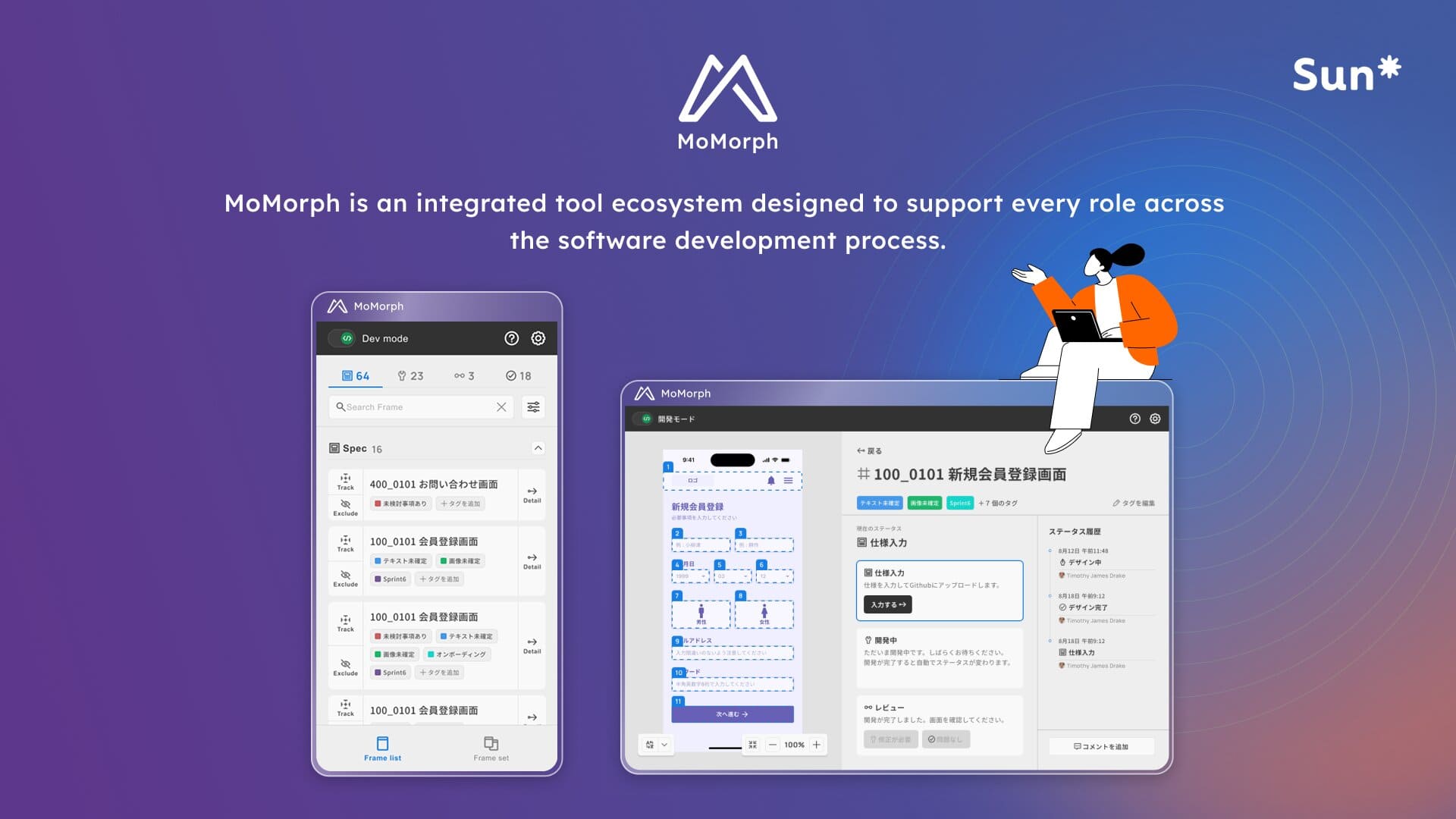
MoMorph is Sun*’s answer to that gap.
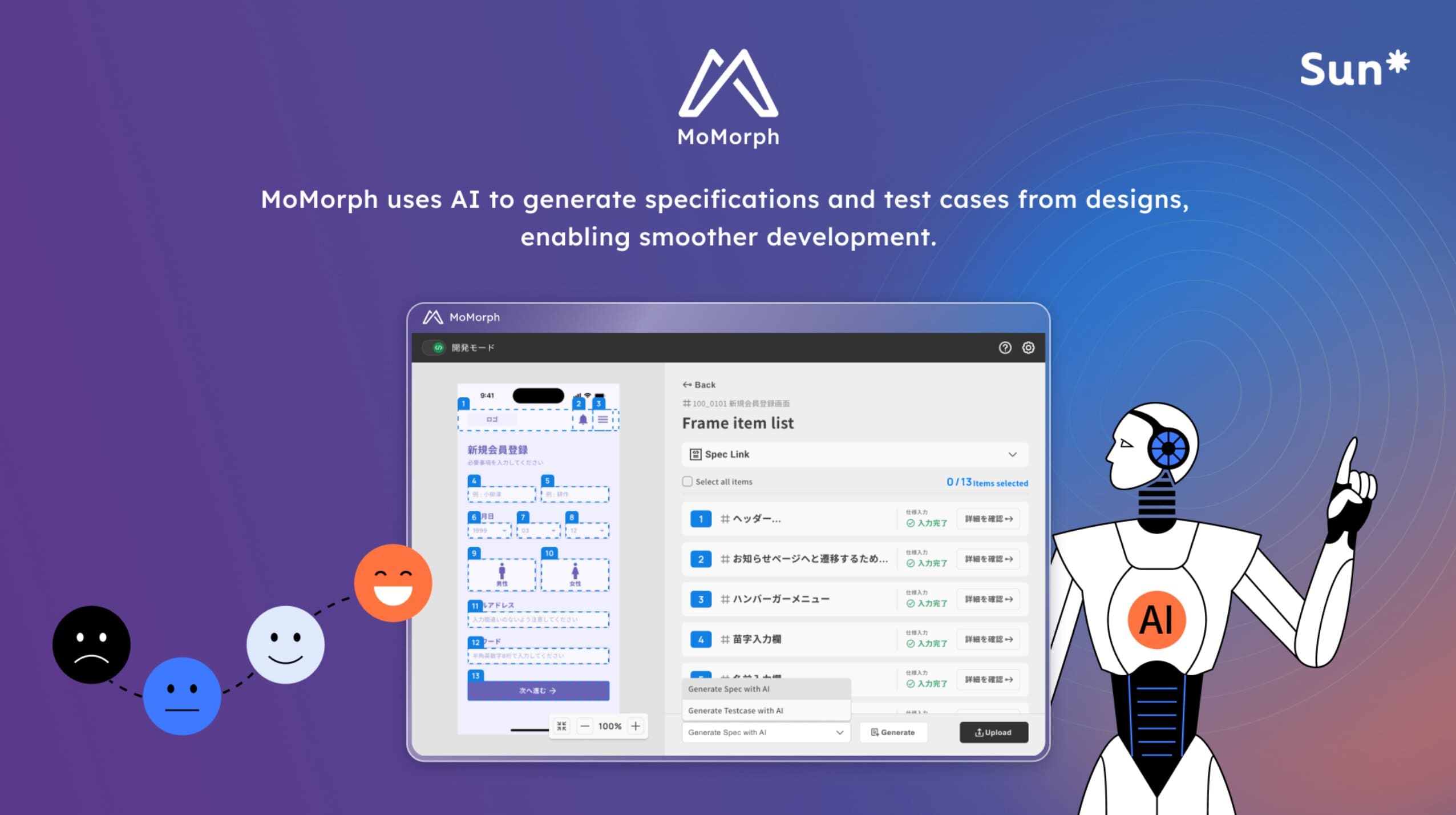
MoMorph – Spec-Driven Generation for full-stack AI development
Sun*’s Spec-Driven Generation platform is MoMorph, built to close the gap between what AI coding tools promise and what they actually deliver.
The core idea is straightforward: before any code is generated, requirements are formalized into a validated, structured specification that covers business logic, API contracts, data models, and test expectations in full.
Generation happens from that spec, not from ad-hoc prompts, not from partial documentation, not from what the team thinks was agreed.
What makes MoMorph different is not just where generation starts, but how far it reaches.
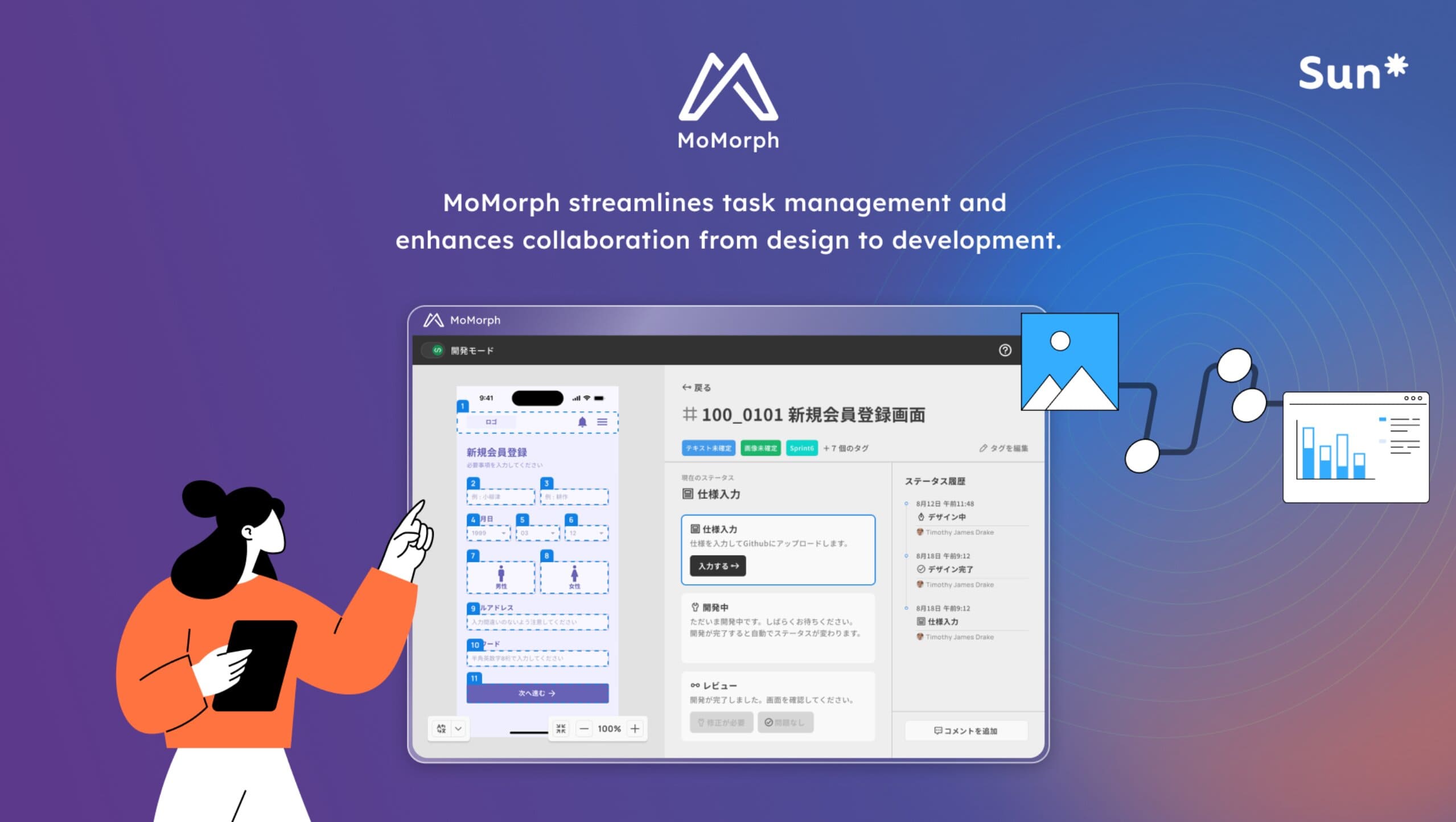
Most AI coding tools participate in isolated tasks – write this function, suggest this test, complete this block. MoMorph is designed to participate in the entire end-to-end workflow: from a Figma design through to specifications, test cases, implementation plan, code, and review.
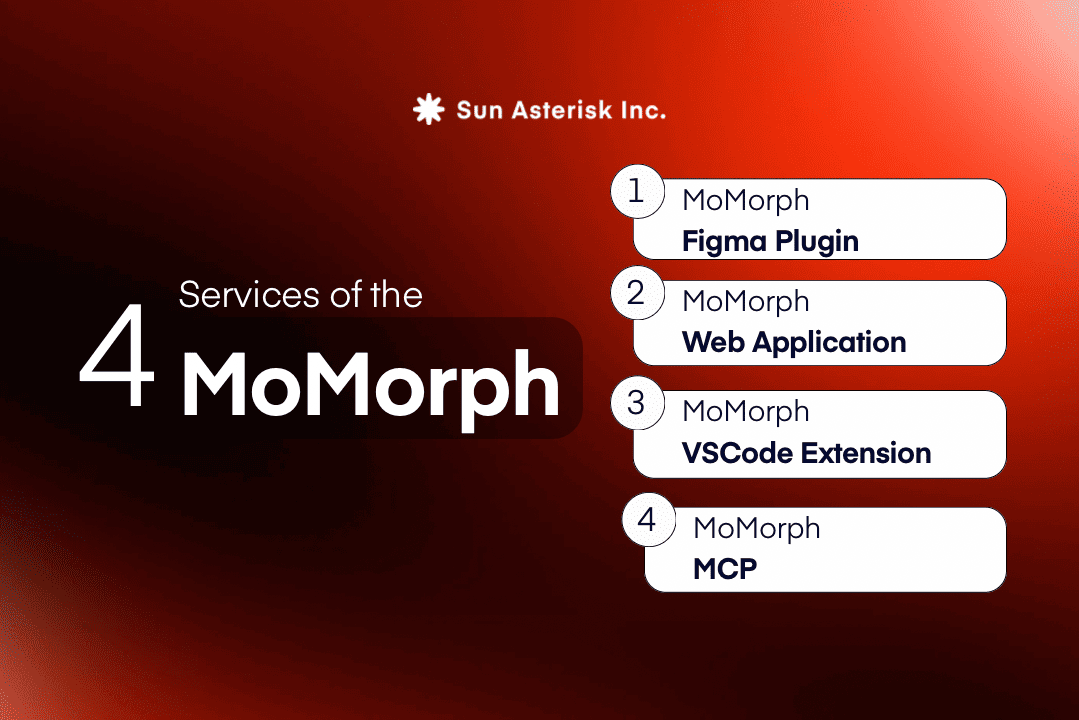
The platform itself is built to fit into the way development teams already work:
- A Figma plugin and web platform manage the development state across design, specs, and test cases.
- A VSCode extension and CLI bring the workflow directly into the environment engineers work in with custom AI agents for frontend, backend, tests, class diagrams, and DB models.
- And MoMorph’s MCP server connects structured project knowledge to the coding agents teams are already using so those agents are working from validated project context, not generic assumptions.
MoMorph does not replace engineers or remove the need for experienced judgment about what to build and why. It gives every member of the team – regardless of seniority, regardless of when they joined – the same complete, validated context to work from.
What changes for your project
The impact of MoMorph goes beyond internal efficiency, it fundamentally reshapes the client experience throughout the entire partnership.
Development cycles become shorter and more predictable
When generation starts from a validated spec, the output is correct in a way that output from incomplete context is not. The rework cycle does not disappear entirely, but it shrinks and more importantly, it becomes bounded. Teams know what they are correcting and why.
Sprint velocity stops being a number that fluctuates unpredictably from week to week and becomes something that can actually be planned against. For clients, this means shorter time-to-production per feature, fewer unplanned delays mid-engagement, and release schedules that hold up to scrutiny instead of slipping by days that compound into weeks.
Quality holds across the full stack
One of the most consistent failure modes we see in AI-assisted projects is the surface-layer illusion: the frontend looks right, the demo goes well, and the integration issues appear only when backend and frontend are connected for the first time.
When backend and frontend are both generated from the same validated spec, those assumptions are unified. Cross-layer consistency is not something the team has to manually enforce, it is a property of the generation process. Fewer integration bugs reach QA. Regression risk on releases drops.
What gets shipped is stable in a way that AI-generated code without this foundation rarely is.
Scope changes don’t cascade to rework
Requirements evolve on every project. The real challenge is absorbing changes without losing track of what was agreed and what needs to update as a result.
Because every generated artifact in MoMorph traces back to its originating requirement, scope changes produce targeted updates rather than cascading corrections. Teams can see exactly what is affected, update the spec, and regenerate from that point. Final documentation reflects what was actually built — not an approximation assembled at the end of the engagement.
Team scaling does not introduce proportional quality risk
Adding engineers mid-project is one of the most reliable ways to introduce quality variance in a software engagement. The new team members fill gaps with assumptions. Senior engineers get pulled into alignment conversations that were not in the plan. Output quality becomes uneven in ways that are difficult to detect until bugs surface.
With spec-driven development, every engineer – new or existing – works from the same complete specification. Consequently, even as team compositions naturally shift during long-term engagements, the quality of output remains consistent rather than fluctuating with personnel changes.
What this means at the business level
At the delivery level, spec-driven development enables features to reach production faster through a more predictable path, with fewer integration issues and a quality baseline that holds as the project grows in complexity.
At the business level, lower rework means lower total project cost — not because the engagement is priced differently, but because less of the budget is consumed by correction cycles that should not have been necessary in the first place.
Traceability from requirement to implementation means handoff documentation that reflects what was actually built. And through a spec-driven development approach, a different risk profile of the engagement is structurally reduced.
Clients are not betting on individual engineer quality or hoping the AI happens to generate something usable. They are working within a spec-driven development system designed to produce consistent, traceable, production-ready output from the start.
Interested in Sun* MoMorph in your development?
Talk to our team!